In retail history

UPCEOn June 26th, 1974, a cashier at the Marsh Supermarket in Troy, Ohio ushered in the modern era of retail cashiering when the scanned the first item sold with a Universal product Code or UPC.

The first UPC codes were developed and patented in the 30s and 40s with the first practical attempts to use UPC coming in the 1960s when railroads experimented with multi-color codes for tracking rail cars.  The experiment was not successful and the railroads discontinued their use.

Continue reading

Recommended reading – Selling Retail


Lawhon Bk 1

Many people assemble a “Summer Reading List.” Sometimes these are actual plans that are carried out and other times they are mere wish lists of books that aspire to read.  The types of books that make the list can range from the easy to read and not too taxing books of romance, mysteries and the like.  Others tackle the classics, those books that you should have read years ago but never got around to.  (I recently picked up Three Famous Short Novels by William Faulkner and quickly realized why I never got through them in college.)

So, if you are in retail and are looking for a good read, I recommend Selling Retail Books 1 & 2 by John F. Lawhon.  This classic was first published over 30 years ago and continues to stay relevant and insightful today.

Continue reading

In retail history

Shopping_cart

From saving arms to increasing transaction size to marring car finishes, a new era of shopping convenience begins on June 4th,1937 with the introduction of the shopping cart.

On April 3rd, 1920, Sylvan Goldman and his brother Alfred, opened the first supermarket in the state of Oklahoma.  One evening in 1936, Sylvan began to wonder how he might get people to buy more items in his store.  He realized that many shoppers limited their purchases to what they could hold easily in the arms or carry in a small basket.  Looking aroundHe found a folding chair that he fastened two baskets to the seat and attached wheels to the legs.  He knew he was on to something.

Over the next few months, he worked with Fred Young and Arthur Kosted, area mechanics, to refine his invention.  Finally, on June 4th, 1937, he introduced the shopping cart at his Humpty-Dumpty Supermarket in Oklahoma City.

Along with a lucrative retail career, Sylvan also invented the airport baggage cart.

In retail history

Rich's_Downtown_Department_Store

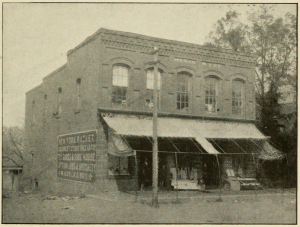
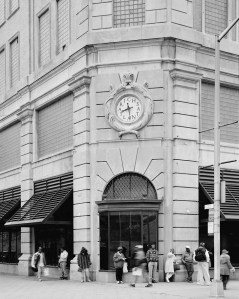
On May 28th, 1867, Mauritius Reich, a Hungarian immigrant, opened a dry goods store at 36 Whitehall St in Atlanta, Georgia.  The store named M. Rich Dry Goods with the name being derived from Mauritius Reich’s name being anglicized to Morris Rich.

Due to their rapid success, Rich’s moved four times by 1882 and was considered one of the big five retailers in Atlanta.  The Rich family operated the company until 1976 and the name plate was retired by the current owners on March 6th, 2005.

Rich’s enjoyed a loyal following over it 100+ years in operation.  Two fondly remembered traditions are the Great Tree for Christmas and the Pink Pig monorail in the toy department for the Holidays.

In retail history

hudsonslogo

The Hudson’s Bay Company is founded on May 2, 1670 making it the oldest commercial enterprise in North America.

Incorporated by English Royal Charter as The Governor and Company of Adventurers of England trading onto Hudson’s Bay.  Founded as a fur trading business, HBC was once the largest landowner in the world with control of 15% of the total acreage in North America.  As such, it served as the de facto government until European states and the US laid claim.

As the fur trade dwindled in the early 1800s, HBC reinvented itself as a mercantile business establishing stores across Canada. HBC continues as a retailer today operating Hudson’s Bay, Lord & Taylor (the oldest luxury department store in North America), Saks Fifth Avenue, Home Outfitters, Gilt and Galeria Kaufhof.

In retail history


Original Target Logo 1962-1967

Original Target Logo
1962-1967

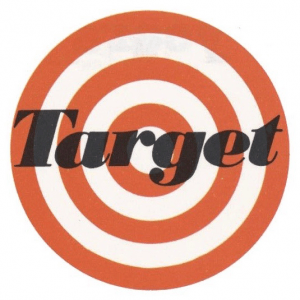
On May 1st, 1962, the Dayton Company opens their first discount retail store, Target.

The Dayton Company traces their roots to  the Goodfellow Dry Goods Store opened in downtown Minneapolis in 1902.

The company prospered as a traditional downtown department store for over 60 years and in the 1950s began to expand to suburban shopping malls.

John Geisse, a Dayton’s employee, suggested opening upscale discount stores in the suburbs. The company and its board were originally hesitant since their did not want to “cheapen” their brand. The name Target was used to prevent customers from associating the discount store with their traditional department stores.  Geisse would go on to founded the Venture chain and the Warehouse Club.

Continue reading

Leon Leonwood got it right

Bean

I received a mail-order catalog yesterday, a common occurrence in my home.  Like most homes,  catalogs make their way quickly to the recycling bin.  Some unopened, others just skimmed and a select few actually read.

The third page of L. L. Bean’s “The Spring Collection” catalog caught my attention and reminded me why I admire them as a retailer.  The page contained a quotation from L. L..

“L. L. himself always said that he didn’t consider a sale complete ‘until goods are worn out and the customer is still satisfied.'”

He got it right.