


Why invest in a dying industry? It is a perfectly valid question. With headlines screaming about the demise of brick & mortar or the losing battling with Amazon and on-line retailers, why would anyone be opening physical stores? On-line retailers realize that people like to shop in different ways and multichannel retailers with a strong physical and virtual presence succeed.
So who is investing in the dying industry? Pure players of e-commerce. Late last year, Amazon opened their first bookstore in University Village in Seattle and the store has proven quite successful. (More on that here: http://www.geekwire.com/2016/amazon-books/ ) This is in addition to the showroom they are experimenting with in Seattle. Newegg is building on the success of their first store (Hybrid Center) in LA with a new store in Richmond Hill, Ont. Blue Nile, the largest on-line retailer of diamonds, has been adding physical locations with their “webrooms.”
We also continue to see expansion from non-traditional retailers. Look at Microsoft’s continuing retail store expansion.
Are these retailers creating some new type of brick & mortar stores? No. What they are contributing to is the continued evolution of retail. After all, catalog showrooms were popular from the 50s into the 80s. with companies like Service Merchandise and Best Products and many of these new “store” are an updated version of the concept.
Brick & mortar is far from dead and with new energy coming from these evolutionary retailers, it will have a long and fruitful future.

 Standing at the end of the checkout conveyor, I waited for the cashier to finish scanning our groceries the other day so that I could bag them. While waiting, I watched the parade of people go by on their way out of the store.
 On June 26th, 1974, a cashier at the Marsh Supermarket in Troy, Ohio ushered in the modern era of retail cashiering when the scanned the first item sold with a Universal product Code or UPC.
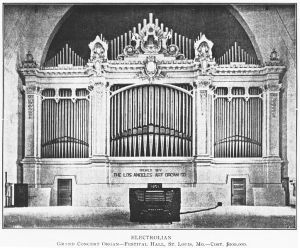 Striving to make his store the finest in the land, John Wanamaker purchased the world’s largest organ produced in 1904 for the World’s Fair in Saint Louis, MO. The organ that had bankrupted the company that built it had languished in storage for years.
 Making a return is not something that most people look forward to at a retail store. Making a return means that you failed at your earlier attempt to successfully buy something. Maybe it didn’t meet your needs, it was the wrong size or color, it did not fit or you just didn’t like it. Making the return is usually inconvenient and certainly takes time and effort. So, why do stores make it worse than it has to be?
 The Observant Customer