
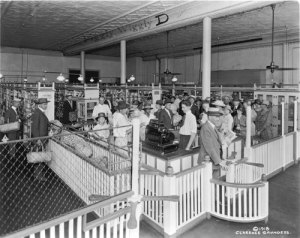
 On September 6, 1916, Clarence Saunders launched the self-service grocery store revolution in the United States by opening his Piggly Wiggly store, at 79 Jefferson Street in Memphis, Tennessee.
Customers entered though their characteristic turnstile at the entrance and then selected goods for themselves from the shelves and paid cash. The store was the first grocery store to use check out aisles in the front of the store, pricing on all items on the shelves and later developed the first shopping carts to aid in shopping. Piggly Wiggly created elaborate aisle displays and arranged the store so customers would travel down all the aisles and view all the merchandise.
Saunders was granted a patent in 1917 for the “Self-Serving Store” concept. Self-serve became so popular that throughout the 1920s & 30s, many grocery and other types of stores converted to self-serve.


 The Observant Customer