P.C. Advertising

AC sign

Not “politically correct” but “personal computer.”

I saw this sign attached to the entry display windows of my neighborhood Sears store today.

I know this type of advertising drives corporate marketing and corporate visual merchandising departments bonkers.  Not very sophisticated but I did see two groups read the sign as they entered the store.

“The whole culture of the company is shifting…”

10base2_cable

While watching a recent tv show on my Comcast cable service, I saw an ad from the same company.  The smiling Comcast employee (or actor portraying one) proclaimed “The whole culture of the company is shifting to customer service!”

As early as 2004, the American Customer Satisfaction Index reported that Comcast had the worst customer satisfaction score of any company or governmental agency in the United States.  Comcast even beat out the Internal Revenue Service in the race to the bottom.  Comcast repeated the achievement in 2007.  There is even a Wiki page reporting on the Criticism of Comcast.

The Comcast statement raises several questions.  What was the culture before this change?  Why is this shift occurring?  What is driving this shift?

It is unfortunate when a company has to advertise that they are increasing their customer service rather than demonstrating it.

In retail history

FAO Schwarz by A Marga from WikiCommons

FAO Schwarz by A Marga from WikiCommons

It was a dark day for children young and old on July 15th, 2015 when FAO Schwarz closed the doors and turned off the lights at its 5th Avenue store in Manhattan.

Founded in 1862 and moving to New York in 1870, FAO Schwarz was the oldest toy store in the U.S. known for their unique often high-end toys.

Why invest in a dying industry?

Brick mortar

Why invest in a dying industry?  It is a perfectly valid question.  With headlines screaming about the demise of brick & mortar or the losing battling with Amazon and on-line retailers, why would anyone be opening physical stores?  On-line retailers realize that people like to shop in different ways and multichannel retailers with a strong physical and virtual presence succeed.

So who is investing in the dying industry?  Pure players of e-commerce.  Late last year, Amazon opened their first bookstore in University Village in Seattle and the store has proven quite successful.  (More on that here: http://www.geekwire.com/2016/amazon-books/ ) This is in addition to the showroom they are experimenting with in Seattle.  Newegg is building on the success of their first store (Hybrid Center) in LA with a new store in Richmond Hill, Ont.  Blue Nile, the largest on-line retailer of diamonds, has been adding physical locations with their “webrooms.”

We also continue to see expansion from non-traditional retailers.  Look at Microsoft’s continuing retail store expansion.

Are these retailers creating some new type of brick & mortar stores?  No.  What they are  contributing to is the continued evolution of retail.  After all, catalog showrooms were popular from the 50s into the 80s. with companies like Service Merchandise and Best Products and many of these new “store” are an updated version of the concept.

Brick & mortar is far from dead and with new energy coming from these evolutionary retailers, it will have a long and fruitful future.




WELCOME TO WALGREENS!!!

Walgreens Lake_Charles_20

“WELCOME TO WALGREENS!,” the recorded announcement echoed throughout the empty 15,000 sq. ft. store.  The announcement was so loud that it startled my wife and myself as we entered the store late in the evening.  It was if the voice of god greeted us to the drug store.  I commented that I had never run across this before in a store.

Continue reading

In retail history

UPCEOn June 26th, 1974, a cashier at the Marsh Supermarket in Troy, Ohio ushered in the modern era of retail cashiering when the scanned the first item sold with a Universal product Code or UPC.
The first UPC codes were developed and patented in the 30s and 40s with the first practical attempts to use UPC coming in the 1960s when railroads experimented with multi-color codes for tracking rail cars.  The experiment was not successful and the railroads discontinued their use.

Continue reading

In retail history


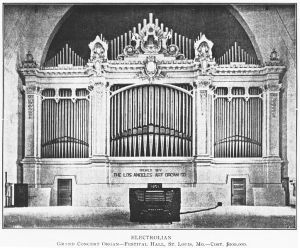
Wanamaker_Organ_1904Striving to make his store the finest in the land, John Wanamaker purchased the world’s largest organ produced in 1904 for the World’s Fair in Saint Louis, MO.  The organ that had bankrupted the company that built it had languished in storage for years.

Requiring thirteen rail cars to move it to Philadelphia, the organ had over 10,000 pipes and took two years to install.  On June 22nd, 1911, the first organ performance was performed to coincide with the coronation of King George of England.  The organ was expanded several times and by 1930, it contained 28,482 pipes.

While the store has gone through a number of sales and name changes, the organ still entertains shoppers to this day over 100 years later.